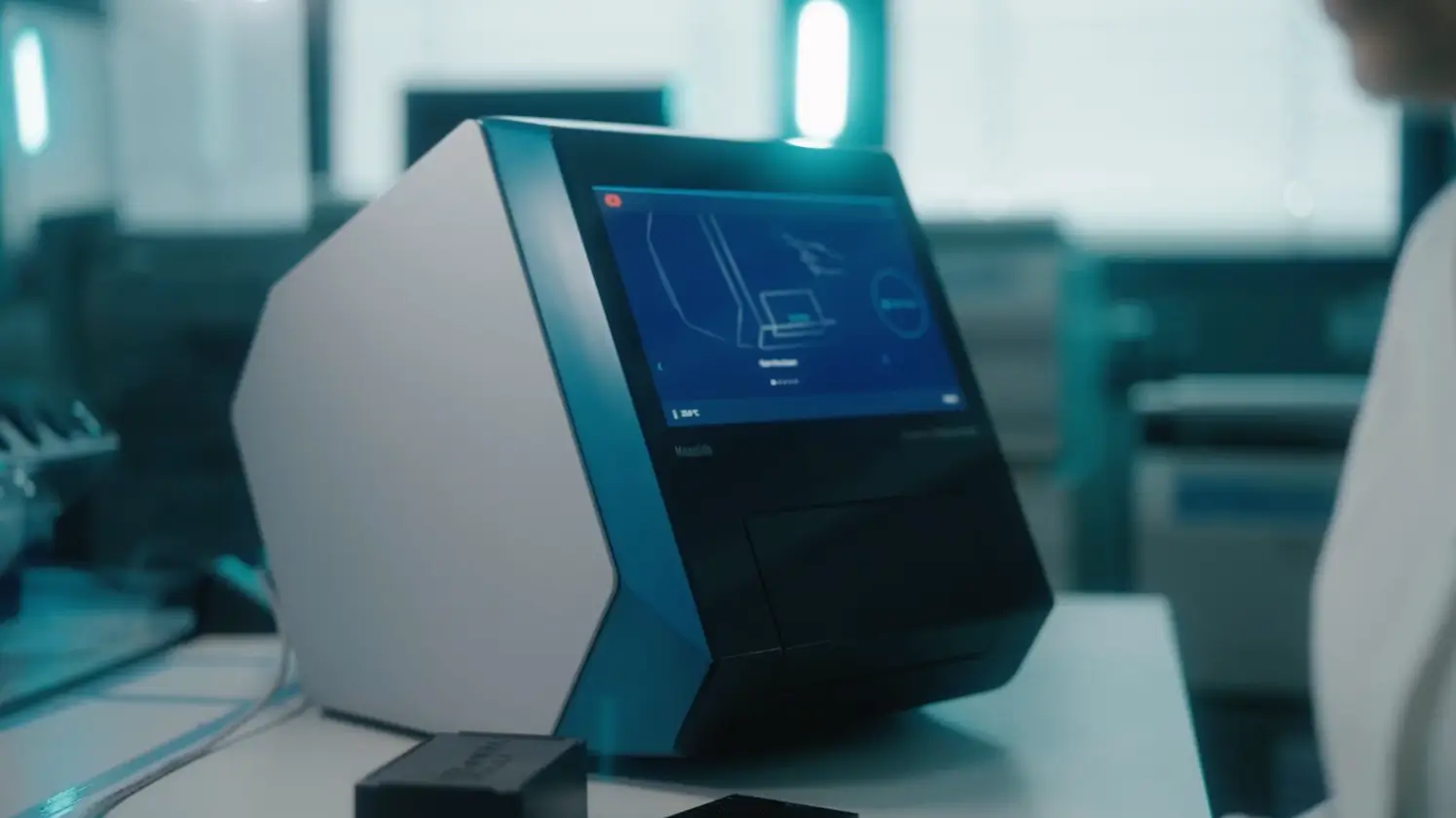


Monolith X

Minimal sample.
Maximum insight.

Precise, in-solution binding affinity measurements across the full range of biomolecular interactions. Use orders of magnitude less sample than other technologies. From fragments to proteins, nucleic acids to small molecules, PROTACs to receptors, get the Kd you need in minutes. 

Group 1618867111

From your first run to your toughest target. 

<p>Get a  K<sub>d</sub> in as little as 2 minutes, with just 10 µL of target.</p>

From your first run to your toughest target. 

<p>Get a  K<sub>d</sub> in as little as 2 minutes, with just 10 µL of target.</p>

Get a  Kd in as little as 2 minutes, with just 10 µL of target.

Monolith X is built for speed and sample efficiency. Run a complete dose-response experiment in under 10 minutes using picomoles of labeled target, no biosensors, no immobilization, no wasted material. Whether you need to measure 10 Kd’s or 100, Monolith X is there.

<p>Measure in solution, the way biology actually works.</p>

Measure in solution, the way biology actually works.

Monolith X measures interactions free in solution and at equilibrium. No surface immobilization means no orientation artifacts, no avidity effects, and no interference from size differences between binding partners. Measure what's really happening even in crude lysates, detergents, or complex matrices. 

<p>Orthogonal confirmation, built right in.</p>

Orthogonal confirmation, built right in.

Two complementary technologies, Spectral Shift and TRIC, run on the same sample in a single experiment. Independent signals confirm true binding events and provide additional structural insights, including sensitivity to aggregation.

<p>Generating data from day one.</p>

Generating data from day one.

An intuitive software interface and straightforward setup mean installation and training can be completed in just one day. MO.Control guides you step by step — from assay setup through to publication-quality binding curves with error bars, automatically generated at the end of every run.
Measure binding affinity with confidence, even when 
your sample is precious and your target is tough.

Scientist

technology tag

Prometheus™ Panta is powered by our unique technologie

DLS enables you to monitor the colloidal stability of your sample. This information helps you optimize your sample by making changes to the sequence or buffer environment, and measuring how those changes impact colloidal stability.

Your challenging targets, finally measurable. 

Monolith X measures a broad spectrum of biomolecular interactions. Detecting binding events in solution, at equilibrium, in a mass-independent manner eliminates complications from size differences between partners. From qualitative single-dose screening to precise quantitative Kd determination, Monolith X covers affinities from weak mM binders to tight nM interactions. 

icon
Small molecule binding 
Characterize small molecule interactions with proteins, peptides, and nucleic acids across a broad dynamic range, from tight nM binders to weak mM fragments. Study RNA-ligand interactions including small molecules, proteins, and peptides. Measure covalent inhibitor binding at equilibrium via direct biophysical readout, with no surface regeneration required.
icon
Membrane protein characterization
Study membrane protein interactions (including GPCRs) solubilized in detergents or within synthetic membrane models such as nanodiscs. Measure unpurified proteins in complex matrices such as cell lysates. 
icon
Additional applications:
basic research & advanced modalities 
Measure molecular interactions in crude lysate under near-physiological conditions, including natural ligands, substrates, and ions. Analyze heterobifunctional degraders (molecular glues, PROTACs) for binary and ternary complex affinities, cooperativity, and hook effects. For intrinsically disordered proteins (IDPs), in-solution measurements preserve conformational flexibility for accurate binding data. 

One readout.

Multiple insights.

Scientist working in a laboratory

Two complementary technologies. One platform. Free in solution. 

Multiple insights.

Spectral Shift

Detects binding by measuring shifts in the emission spectrum of a fluorescently labeled target. Derives affinity constants from the signal ratio with sub-nanometer sensitivity that catches the binders other platforms miss. Qualitatively ranks stability by monitoring shifts during rapid heating. Compares thermal melting profiles with and without ligand to confirm hits and gain deeper insight into binding. 


Temperature Related Intensity Change (TRIC)


Measures fluorescence changes after a brief temperature increase. Confirms hits with an orthogonal signal and reveals ligand-induced effects like aggregation behavior.

Thomas Schubert CEO at 2bind, Germany

“NanoTemper helps us turn challenging biophysical tasks into routine workflows. Their intuitive solutions give us reliable data faster, so our teams can focus on advancing drug candidates.”

Join the Newsletter

Get email updates. Your edge in biophysics. Subscribe today.

Privacy Policy(Required)

Complete your setup.

Monolith Consumables

Get reliable stability data.
Without worrying about sample prep. 

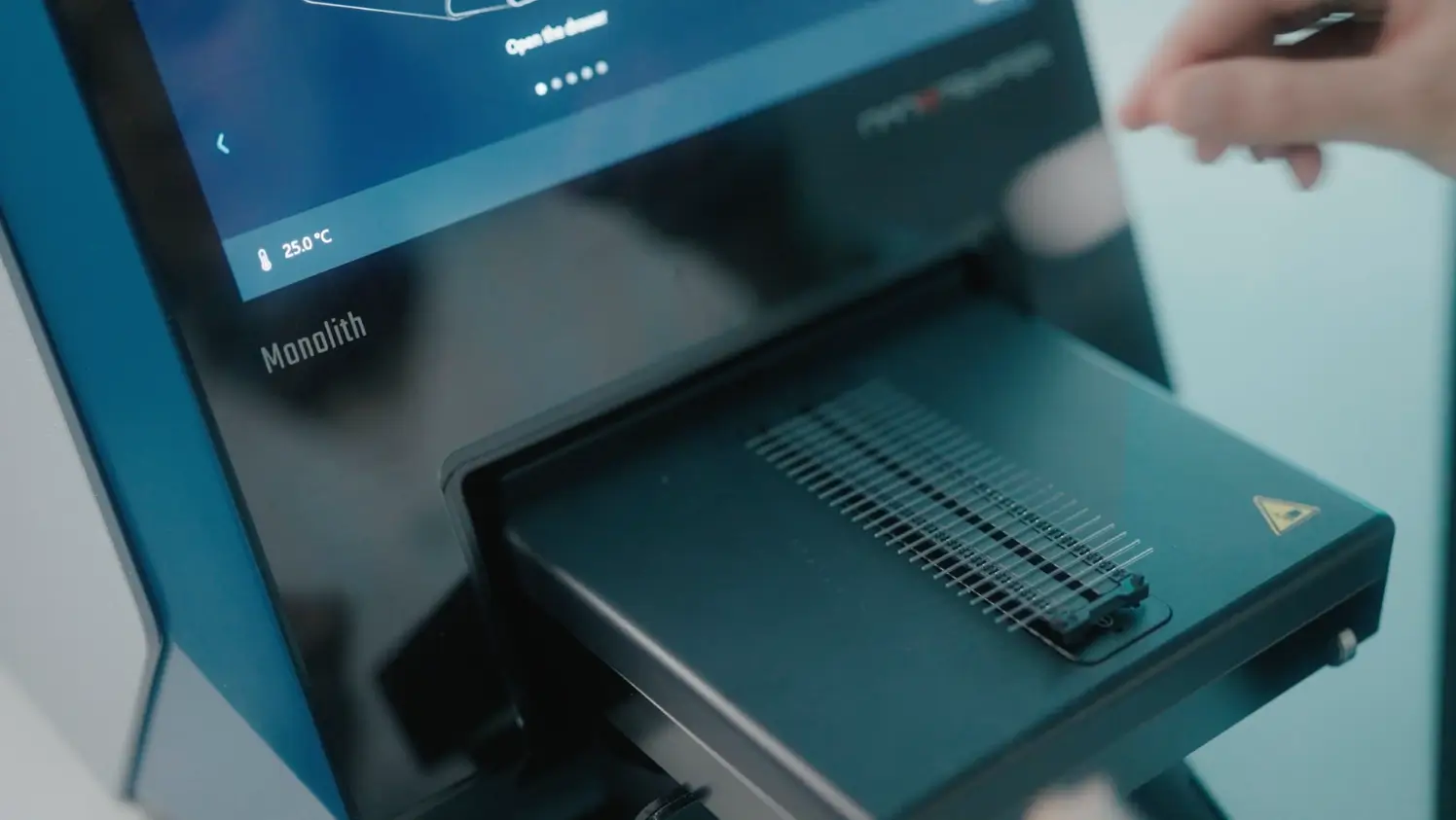
All you need for Monolith X experiments are capillaries. Monolith Xcapillaries are manufactured using the same stringent protocols used for diagnostic-grade materials to ensure the best results. Need more throughput or prefer plates? Check out Dianthus.

Scientists working in a laboratory

Software that's easy to use and easy to learn.

Getting started with affinity measurement is simple with Monolith software. Control software is designed for easy, customizable set-up of experiments and allows you to view data acquisition in real time. Powerful Analysis software enables you to sort, highlight, and get insight into aggregation. All software has a clean interface and intuitive user experience, so you’re ready to get started as soon as your Monolith fires up.

Scientist working in a laboratory

Maximize instrument performance.
Without the Downtime . 

NanoTemper instrumentation is built to the highest standards of quality and reliability; however, it’s important to keep your instruments in good working order to ensure accurate, high-quality data output. Don’t let unexpected delays slow you down or interrupt your lab workflows. Service offerings include: relocation services, operational qualification procedures, and full coverage repair and validations.

FAQs

Monolith

How much sample do I need per measurement?

Monolith X requires just 10 µL of labeled target per capillary — using only picomoles of material. A full dose-response experiment with up to 24 data points can be completed using minimal target, making it ideal for difficult-to-express proteins, rare RNA targets, or any program where sample availability is limited. No immobilization on costly biosensors required. 

Can Monolith X work with impure or complex samples?

Yes. Monolith X supports purification-free binding affinity determination, enabling measurements in crude cell lysates under near-physiological conditions. Even suboptimal samples containing aggregation or precipitation can be analyzed. TRIC provides additional sensitivity to sample quality issues including aggregation and fluorescence inhomogeneity.

What labeling options are available?

NanoTemper offers a comprehensive range of labeling kits compatible with Monolith X, including: His-Tag labeling (RED-tris-NTA 2nd Generation), NHS-ester lysine-reactive labeling (RED-NHS 2nd Generation), cysteine-reactive labeling (RED MALEIMIDE 2nd Generation), SNAP-Tag labeling, biotinylated target labeling, and a Human Fc labeling kit. Spectral Shift Optimized Labeling Kits are also available for His-Tag, lysine-reactive, and cysteine-reactive coupling chemistries.

How do I load samples — is there a risk of cross-contamination?

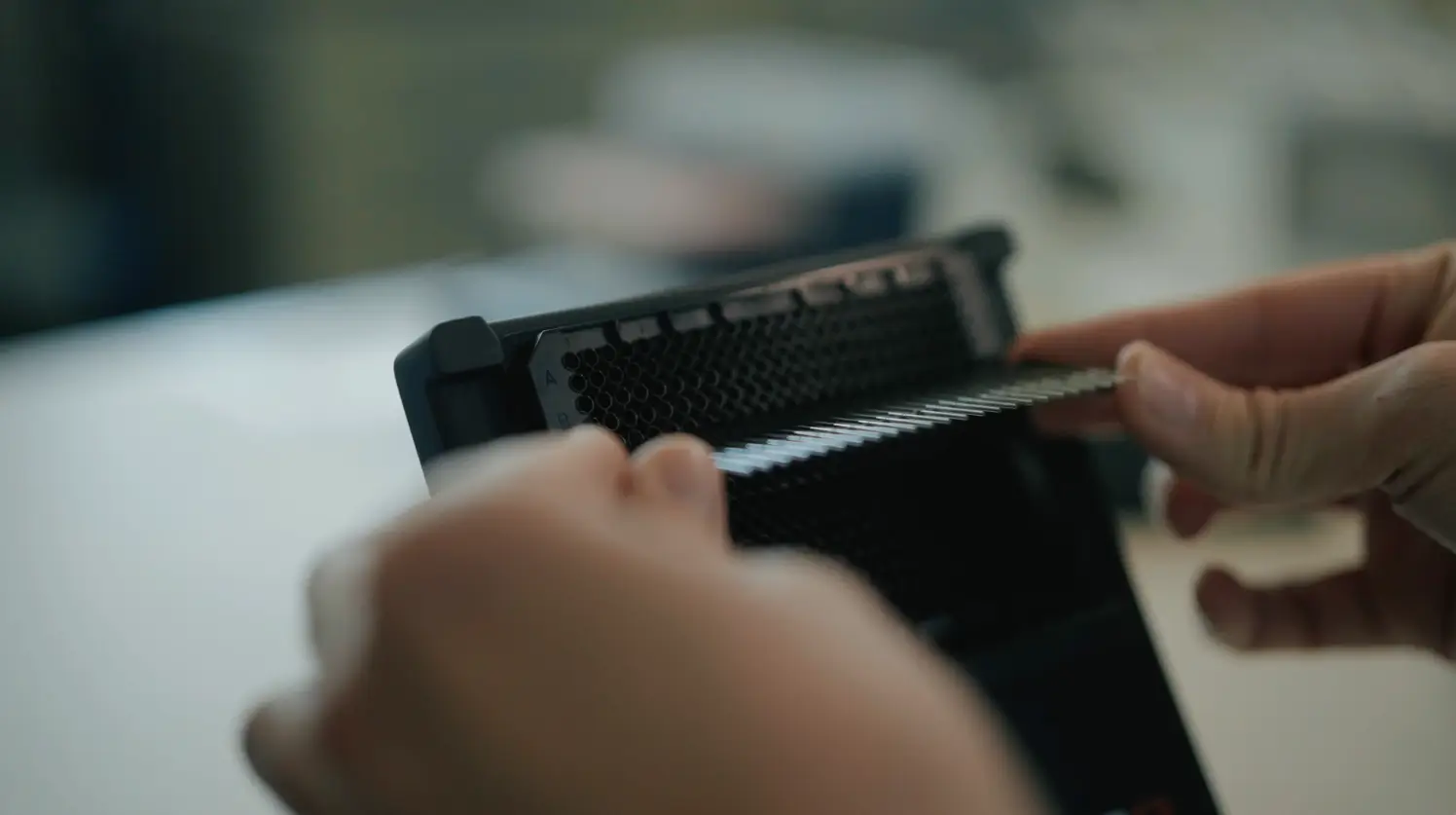
Monolith X uses single-use capillaries, eliminating cross-contamination and removing the need for cleaning or costly chip regeneration. Two capillary grades are available: Standard (borosilicate glass) and Premium (polymer-coated glass to prevent protein adsorption). For high-throughput convenience, Capillary Chips with 24 individual capillaries can be loaded directly from 384-well microtiter plates using a Capillary Chip Filling Station. 

How quickly can I get started?

Installation and training can be completed in a single day. MO.Control software provides step-by-step experimental planning, assay setup guidelines, and immediate feedback on assay optimization. It automatically generates publication-quality binding curves with error bars — no additional data analysis software required. Up to 6 different buffer conditions can be tested in under 10 minutes.